Noli me Tangere
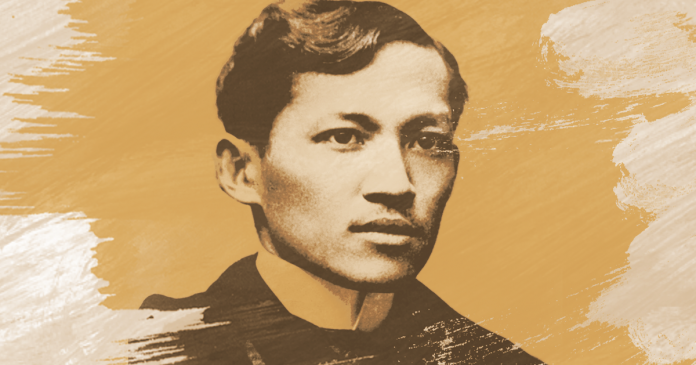
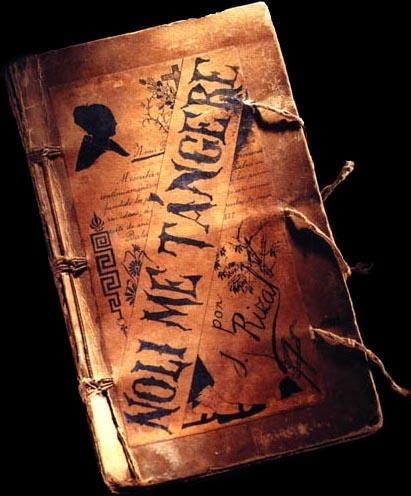
Noli Me Tangere is a novel by Filipino polymath José Rizal and first published in 1887 in Berlin, Germany. Early English translations used titles like An Eagle Flight and The Social Cancer, but more recent translations have been published using the original Latin title.
José Rizal, a Filipino nationalist and medical doctor, conceived the idea of writing a novel that would expose the ills of Philippine society after reading Harriet Beecher Stowe's Uncle Tom's Cabin. He preferred that the prospective novel express the way Filipino culture was perceived to be backward, anti-progress, anti-intellectual, and not conducive to the ideals of the Age of Enlightenment. He was then a student of medicine in the Universidad Central de Madrid.
In a reunion of Filipinos at the house of his friend Pedro A. Paterno in Madrid on 2 January 1884, Rizal proposed the writing of a novel about the Philippines written by a group of Filipinos. His proposal was unanimously approved by the Filipinos present at the time, among whom were Pedro, Maximino Viola and Antonio Paterno, Graciano López Jaena, Evaristo Aguirre, Eduardo de Lete, Julio Llorente and Valentin Ventura. However, this project did not materialize. The people who agreed to help Rizal with the novel did not write anything. Initially, the novel was planned to cover and describe all phases of Filipino life, but almost everybody wanted to write about women. Rizal even saw his companions spend more time gambling and flirting with Spanish women. Because of this, he pulled out of the plan of co-writing with others and decided to draft the novel alone.
Kasaysayan
Interpretation According to Maurice Zundel (1897–1975), in asking Mary Magdalene not to touch him, Jesus indicates that once the resurrection is accomplished, the link between human beings and his person must no longer be physical, but must be a bond of heart to heart. "He must establish this gap, she must understand that the only possible way is faith, that the hands can not reach the person and that it is from within, from within only, that the we can approach Him."[4]. Likewise, later, when Thomas reached out to touch the wounds of Jesus, he declares: "blessed are those who have not seen and yet have believed" [John 20:29] because "He knows it is useless."
Unang nobela ni Rizal ang Noli Me tangere. Inilathala ito noong 26 taong gulang siya. Makasaysayan ang aklat na ito at naging instrumento upang makabuo ang mga Pilipino ng pambansang pagkakakilanlan. Sa di-tuwirang paraan, nakaimpluwensiya ang aklat ni Rizal sa rebolusyon subalit si Rizal mismo ay isang nananalig sa isang mapayapang pagkilos at isang tuwirang representasyon sa pamahalaang Kastila. Sinulat sa wikang Kastila ang Noli, ang wika ng mga edukado noong panahong yaon. Sinimulan ni Rizal ang nobela sa Madrid, Espanya. Kalahati nito ay natapos bago siya umalis ng Paris, at natapos ito sa Berlin, Alemanya. Inilaan niVicente Blasco Ibáñez, isang bantog na manunulat, ang kaniyang serbisyo bilang tagapayo at tagabasa. Ang nobela ni rizal ay tumatalakay sa mga kingisnang kultura ng Pilipinas sa pagiging kolonya nito ng Espanya. Binabatikos din ng nobela ang mga bisyo na nakasanayan ng mga Pilipino at ang kapangyarihang taglay ng Simbahang Katoliko na nahihigit pa ang kapangyarihan ng mga lokal na alkalde. Bumuo ng kontrobersya ang nobelang ito kung kaya't pagkatapos lamang ng ilang araw na pagbalik ni Rizal sa Pilipinas, tinanggap ni Gobernador-Heneral Terrero sa Malacañang at inabisuhang puno ng subersibong ideya ang Noli. Pagkatapos ng usapan, napayapa ang liberal ng Gobernador Heneral ngunit nabanggit niya na wala siyang magagawa sa kapangyarihan ng simbahan na gumawa ng kilos laban sa nobela ni Rizal. Mahihinuha ang persekusyon sa kaniya sa liham ni Rizal sa Leitmeritz: “Gumawa ng maraming ingay ang libro ko; kahit saan, tinatanong ako ukol rito. Gusto nila akong gawing excommunicado dahil doon... pinagbibintangan akong espiya ng mga Aleman, ahente ni Bismarck, sinasabi nila na Protestante ako, isang Mason, isang salamangkero, isang abang kaluluwa. May mga bulong na gusto ko raw gumawa ng plano, na mayroon akong dayuhang pasaporte at gumagala ako sa kalye pagkagat ng dilim ...”
Publication history
Rizal finished the novel on December 1886. At first, according to one of Rizal’s biographers, Rizal feared the novel might not be printed, and that it would remain unread. He was struggling with financial constraints at the time and thought it would be hard to pursue printing the novel. A financial aid came from a friend named Máximo Viola. Rizal at first, however, hesitated but Viola insisted and ended up lending Rizal P300 for 2,000 copies; Noli was eventually printed in Berlin, Germany. The printing was finished earlier than the estimated five months. Viola arrived in Berlin in December 1886, and by March 21, 1887, Rizal had sent a copy of the novel to his friend Blumentritt.
On August 21, 2007, a 480-page then-latest English version of Noli Me Tangere was released to major Australian book stores. The Australian edition of the novel was published by Penguin Books Classics, to represent the publication’s “commitment to publish the major literary classics of the world”.[4] American writer Harold Augenbraum, who first read the Noli in 1992, translated the novel. A writer well-acquainted with translating other Hispanophone literary works, Augenbraum proposed to translate the novel after being asked for his next assignment in the publishing company. Intrigued by the novel and knowing more about it, Penguin nixed their plan of adapting existing English versions and instead translated it on their own.